
Five libraries you can't miss on your visit to Bogotá
Guide to discover the best of these temples of knowledge, which have become spaces for art, creativity and reflection. Several of these libraries are authentic architectural jewels.
The capital of Colombia, known in 1883 as the 'Athens South American' thanks to its great cultural and artistic offer and its fruitful inventory of libraries, today, 142 years later, is consolidated as a city where culture, research, science, technology and innovation are achieved through its important District Network of Public Libraries (BibloRed).
This system not only maintains the idea of a cultivated and scholar Bogotá, but each of its spaces, throughout the city, no longer is that old shelf where books are kept to become and be conceived as scenarios where each visit is a unique and enriching experience. Public libraries are not only temples of knowledge, creativity and learning: they are places where you can participate in workshops to boost your creativity, attend recitals, book launches, watch movies and even do sports. And they are authentic masterpieces of architecture and witnesses to the history of Colombia.
These features allow you to enter the circuit of the bogotan libraries, which date from 1777 with the opening of the doors of the Royal Public Library of Santafé of Bogotá, then become the National Library and that together with the Luis Ángel Arango, the Virgil Barco, the Manuel Zapata Olivella - Tintal and the Julio Mario Santo Domingo are catalogued by the Tripadvista portal among the 10 best in the city both because it is a silent shelter for reading lovers and because of its meaning as a source of knowledge and social encounter. In 2007, the city was proclaimed the World Capital of the Book by UNESCO.
Here are five of the most emblematic libraries in 'Bogotá, your house', which you can't miss on your visit.
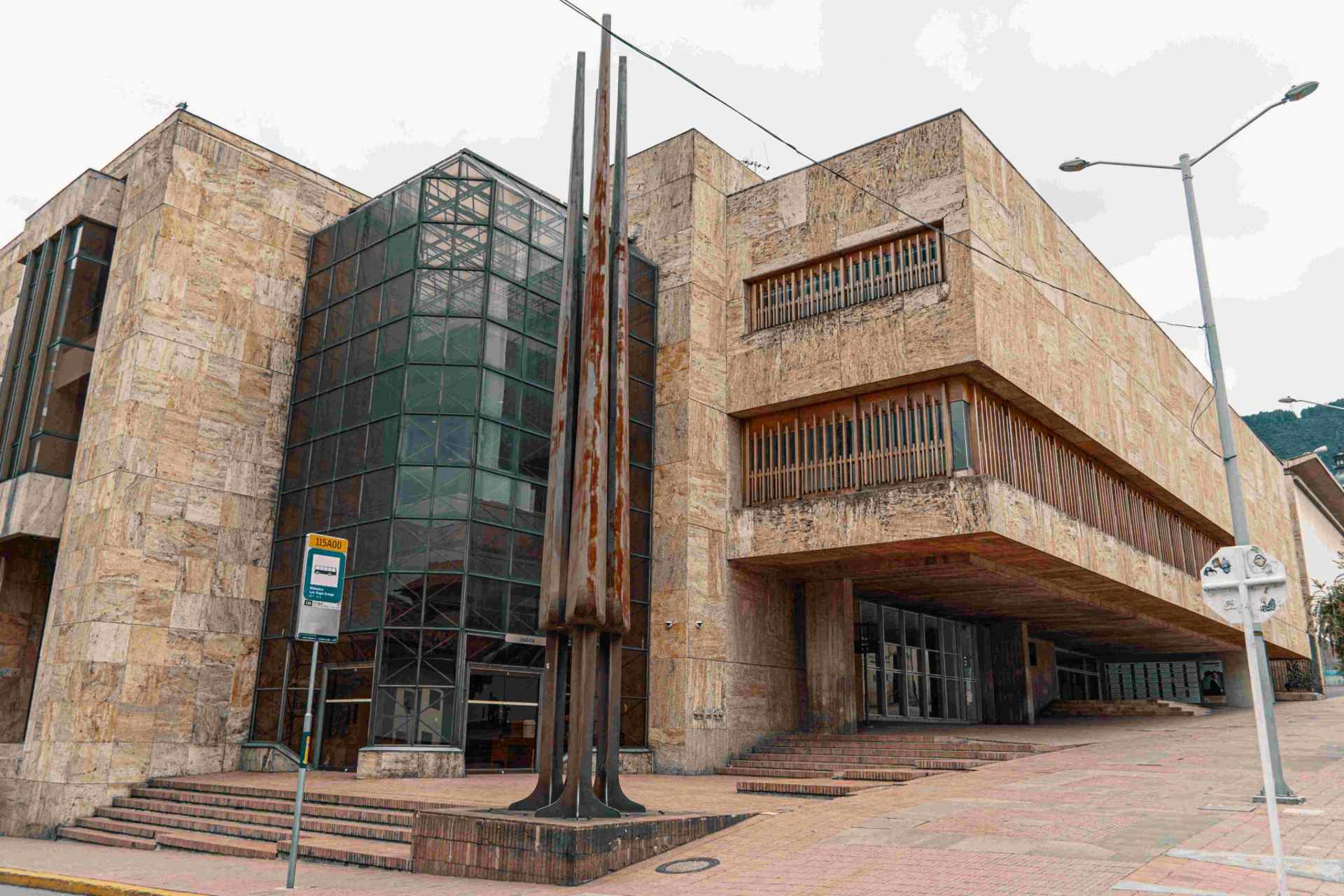
The Luis Ángel Arango Library was originally in 1923. Photo: Ricardo Baez - TDI Archive
Luis Ángel Arango Library
Its origins date back to 1923, when the Bank of the Republic received a collection of the Official Journal and economic books. Since then, it has increased to have, to this day, about 2 million copies.
He received the National Architecture Award in 1966 and was declared a Good of National Cultural Interest in 2010. And it is named after his predecessor, the lawyer and financier Luis Ángel Arango, then general manager of the Bank of the Republic, which founded and manages the library.
This educational and cultural icon, with its main seat in the heart of La Candelaria and opened on 20 February 1958, occupies an area of 45,000 square meters distributed in two blocks. On the north side you can find more than 2,000 reading posts and 11 specialized rooms (basic collections, mapoteca, researchers, hemeroteca, science and technology, economics, arts and humanities, legal sciences, languages, audiovisual and music).
On the south side, in the Art Museum of the Banco de la República, you can see an important sample of modern and emerging Colombian and universal art. And a space recommended for being really unique: the Hall of Rare Books and Manuscripts. It's 46,000 bibliographic jewels that are ineligible for its rarity!
This library is probably the most popular for tourists. More than 5,000 people visit it daily. This and other activities of the varied agenda can be found at: https: / / www.banrepcultural.org /
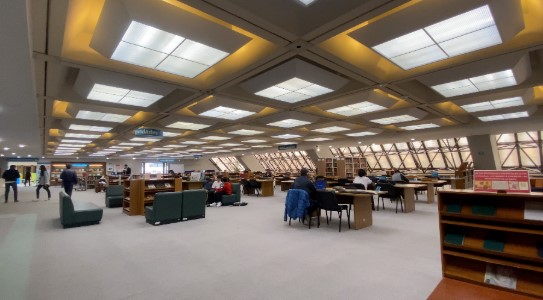
The Luis Ángel Arango contains 2 million copies. Photo: Luis Holguín - TDI Archive
National Library
Founded in 1776 by Viceroy Manuel Guirior, and recognized as the first public library in Latin America, the National Library has had several headquarters: the original, in the current Palace of San Carlos and then, in 1823, in the classrooms of the school of San Bartolomé, in La Candelaria.
Declared national monument in 1975 and installed on the southern side of the Independence Park - in an art-déco-style building designed in 1983 by the Colombian architect of English origin Alberto Wills Ferro - it houses a collection of more than three million pieces, including 51 incunable books (works published in the 15th century at the beginning of the printing), 610 manuscripts, photographs and audiovisual material, as well as 30,000 books prior to 1800.
The simple construction warns an inner cross-shaped plant with inner courtyards in each of its vertices. In the center, the triple-high lobby houses a monumental staircase leading to the two upper levels and to the side corridors leading to the offices and administrative areas. The austere, but correct, facade is composed of a central body divided into three parts: a central and two side, and two bodies at the ends that kill the building.
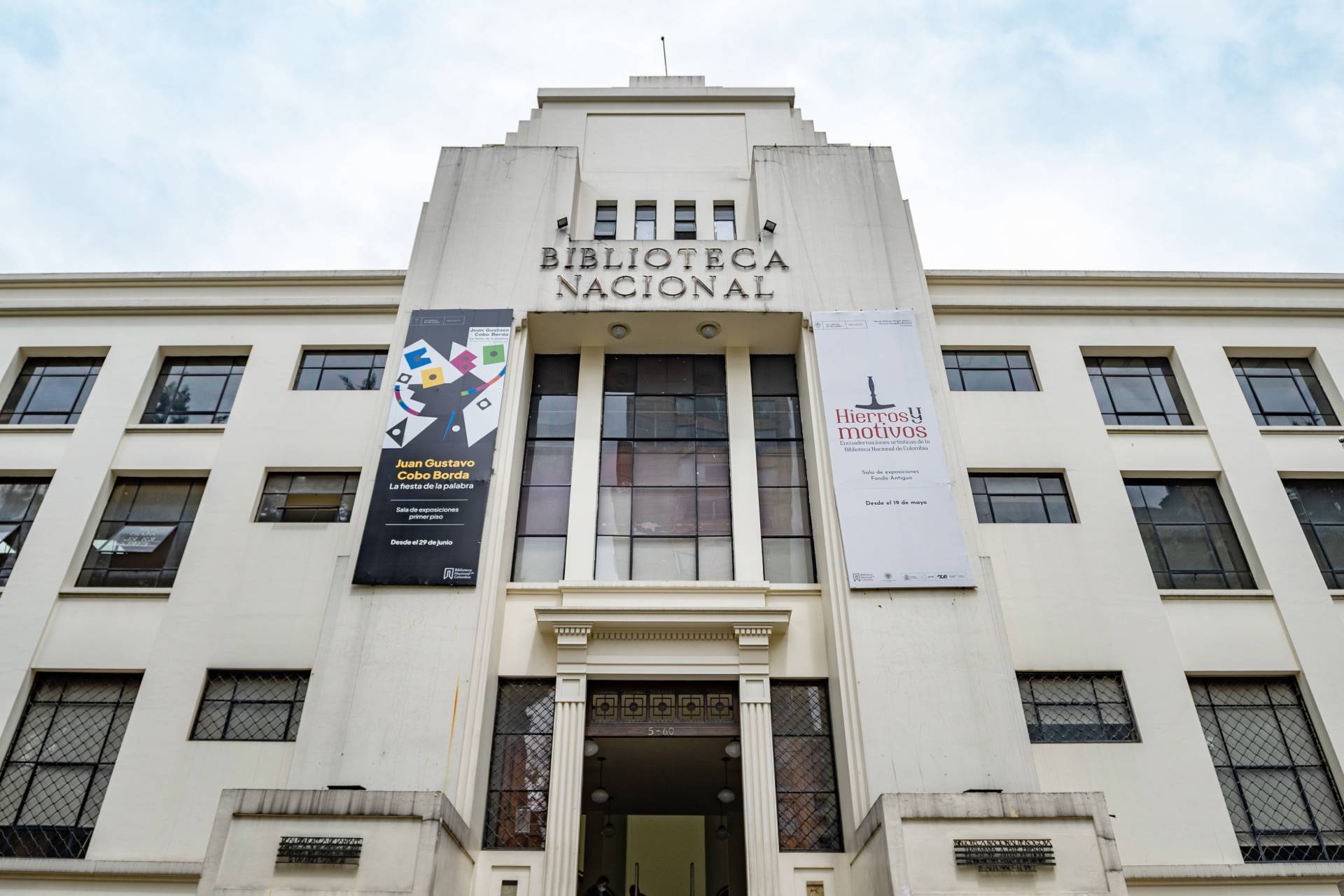
The National Library is an art déco style building. Photo: Stefania Alvarez - TDI Archive
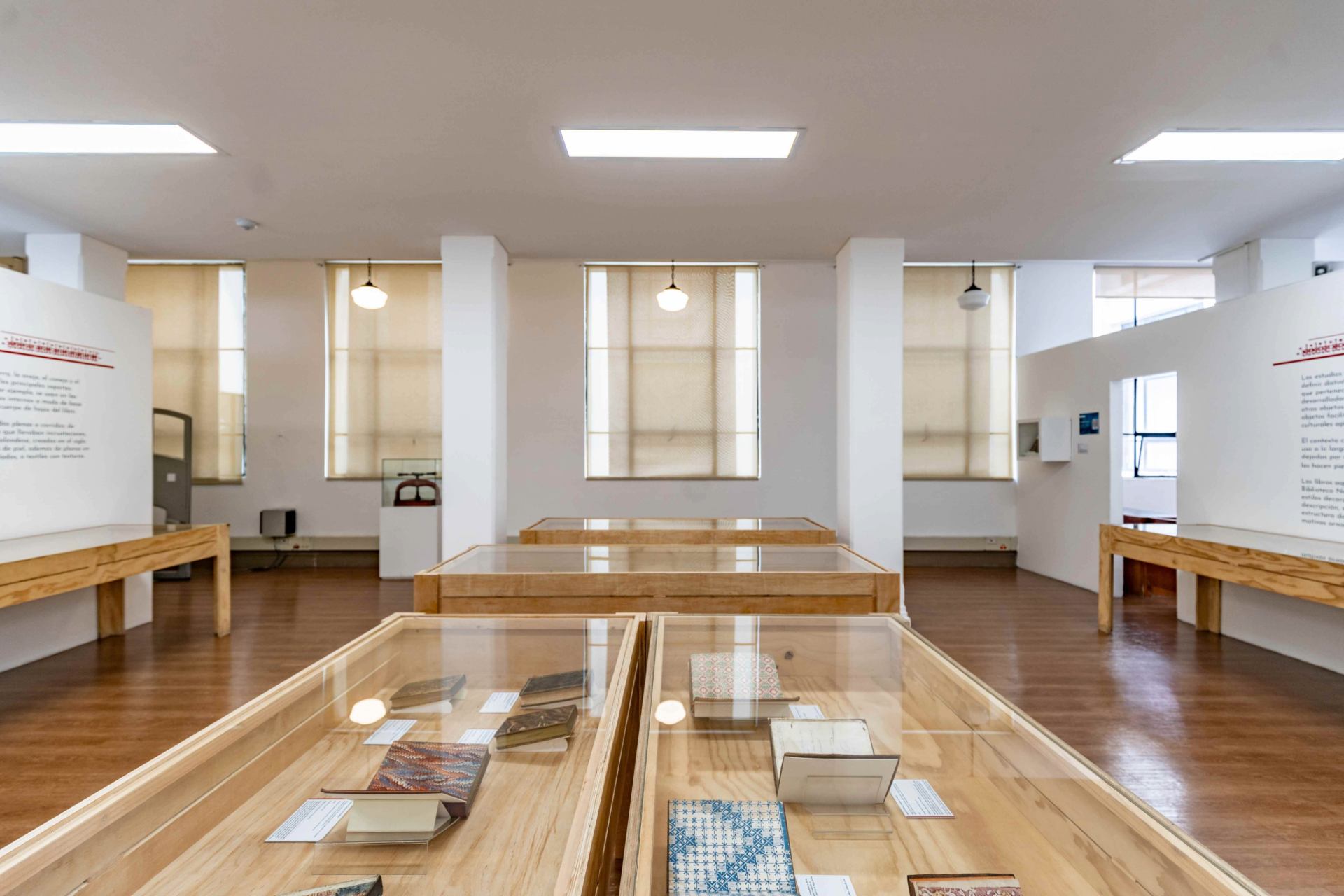
The National Library was declared a national monument in 1975. Photo: Stefania Alvarez - TDI Archive
As a curious fact, This temple of knowledge was the only one of public character until 1958, when the Luis Ángel Arango Library was inaugurated. This cultural space is a recurring meeting site of academics, students and artists.
Take advantage of your visit to Bogotá and know this temple of knowledge. Reports: https: / / www.libranacional.gov.co / es-co
Virgil Barco Library
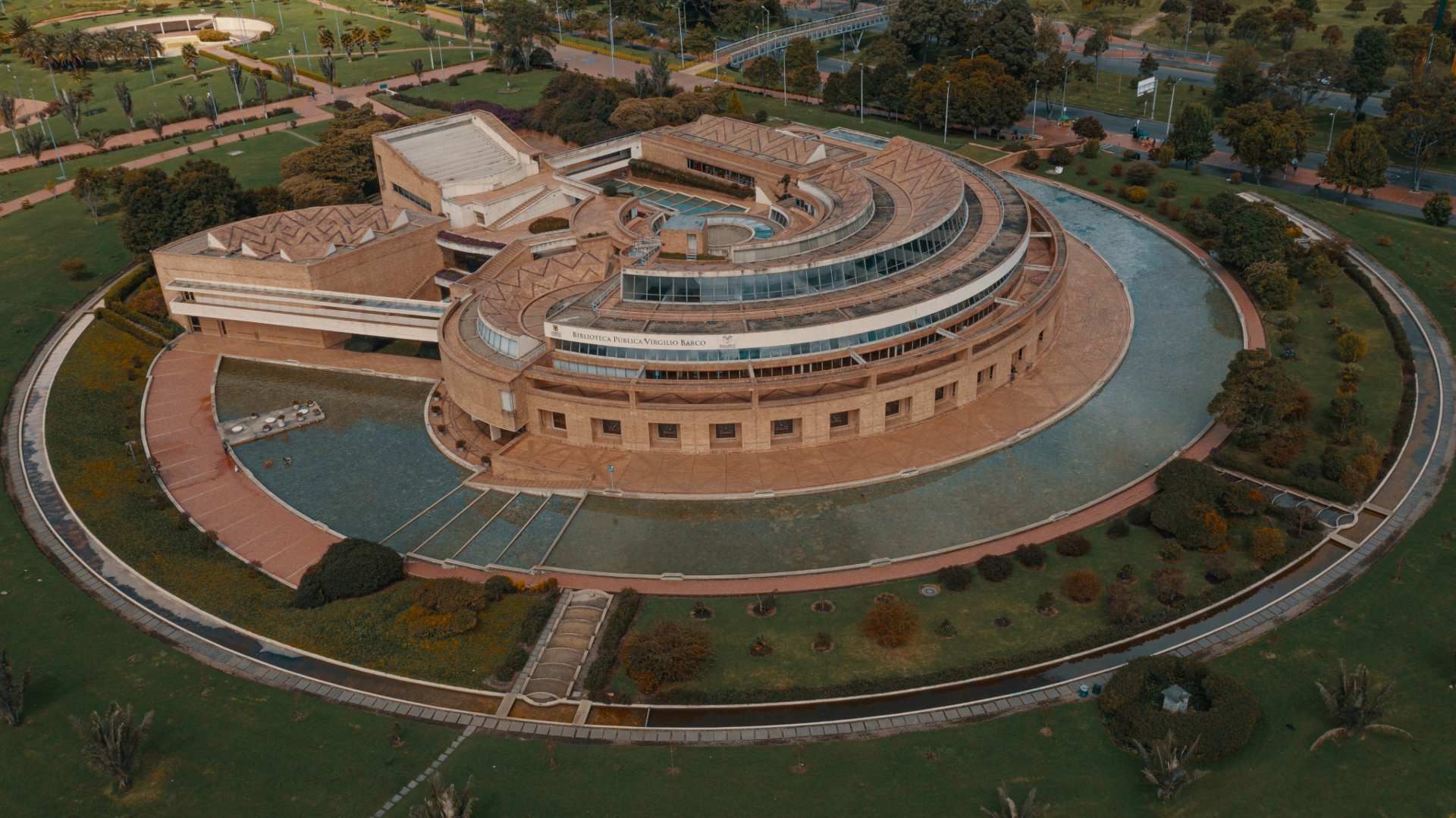
With its large water mirrors, geometric figures that remember the aboriginal traditions and its huge windows that give natural light to readers, the Virgil Barco Library is one of the most important works of the French Colombian architect Rogelio Salmona. A masterpiece of local architecture, inaugurated in 2001 and located within the complex of the Simón Bolívar Metropolitan Park.
It is said that for its construction, which covers 16,000 square meters, Master Salmona took into account that the work was merged with the public space, forming a series of geographical, landscape, historical and living values.
Its location will surprise you, as it is surrounded by gardens and sports and recreational complexes. On the outside, the design presented as a circular three-story stone figure draws attention. Its ceilings are covered by tiles that evoke the amphoras of the preColumbian Quimbina culture. And its main entrance ends the decoration. It is wide, with a wide variety of native vegetation, a very long corridor and steps surrounded by beautiful water sources. It seems that in that place, knowledge and art were like water itself.
If its facade is beautiful, by its snail form, water mirrors and trails; its interior is even more so. Four rooms are highlighted: the general, with more than 600 consultation posts, provides information in all areas of knowledge; and the children's room, aims to promote reading habits in the smallest and family integration. The Bogotá Hall is an enabling space for the development of citizen culture, thanks to its specialized collection of Bogotá and Cundinamarca. And you can finally enjoy the video and the phonoteca.
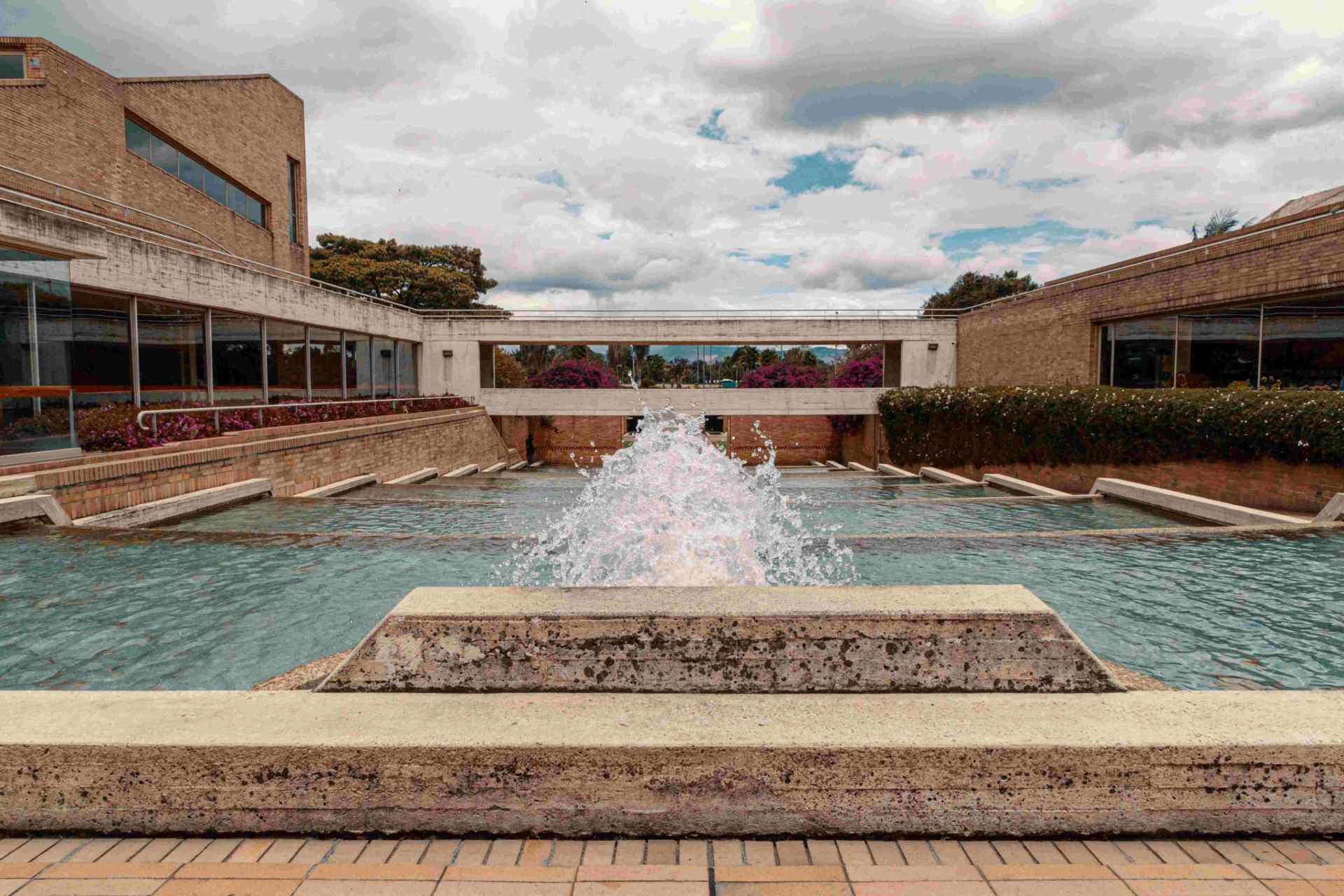
The Virgil Barco Library is a masterpiece of local architecture, inaugurated in 2001. Photo: Ricardo Baez - TDI Archive
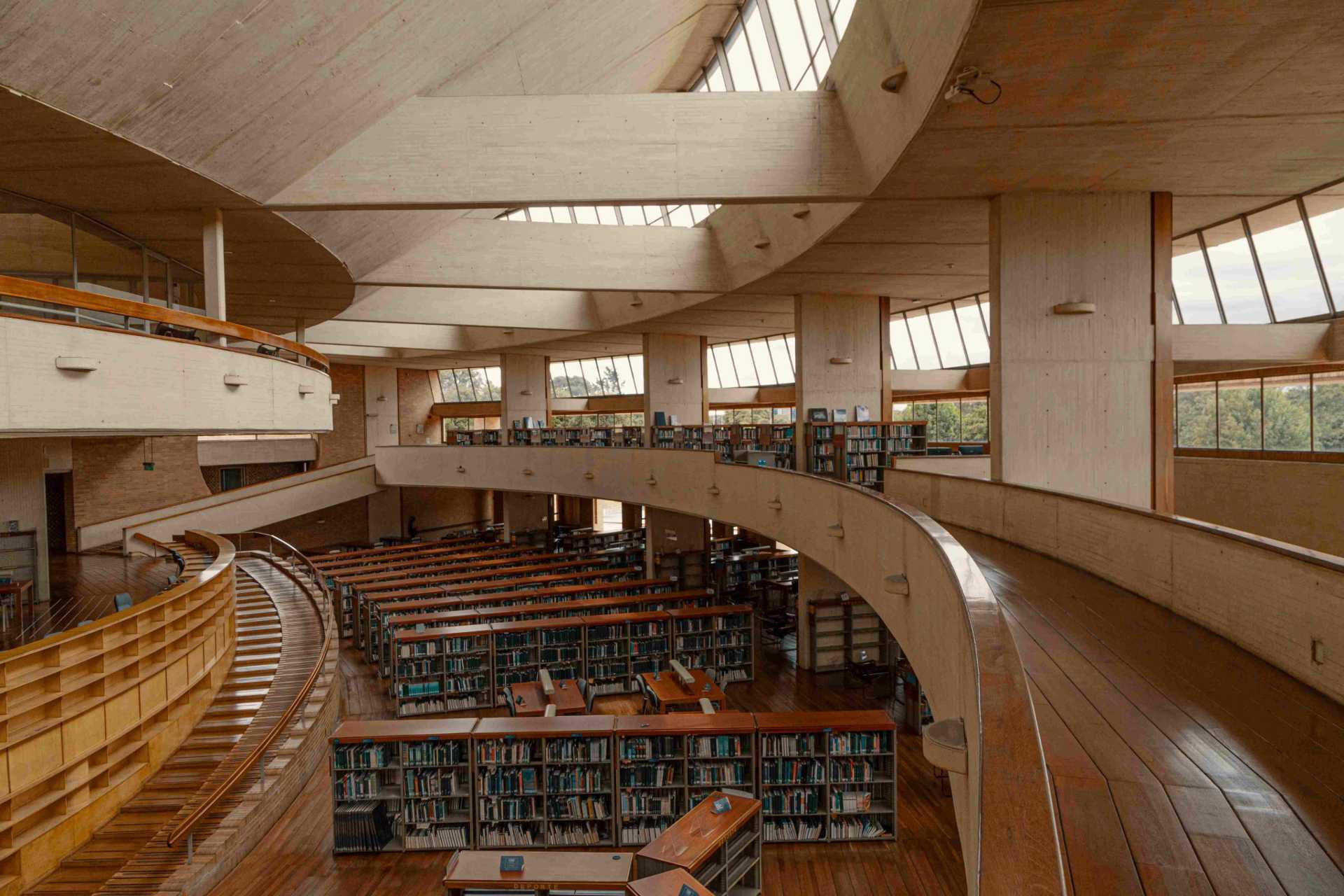
The Virgil Barco stands out for its shape of brick snail, its green gardens and immense water mirrors. Photo: Ricardo Baez - TDI Archive
The Barco Virgil is a world of knowledge that you can't miss. It receives a million visitors a year and, in short, has a collection of more than 97,000 bibliographic and audiovisual resources. In addition to cultural and recreational activities for those passionate about knowledge, its interconnected terraces allow visitors to enjoy a privileged panoramic view of the city.
Take advantage of your visit to Bogotá and know this temple of knowledge. Reports: https: / / biblored.gov.co / libraries / libra-virgilio
Julio Mario Santo Domingo Library
Another of the masterpieces of the Colombian architect Daniel Bermudez is the Julio Mario Santo Domingo Public Library Cultural Center. Since its opening, on 26 May 2010, it became a cultural milestone in northern Bogotá.
Located in the town of Suba, in the San José de Bavaria district, this impressive complex of 23,000 m ² offers a megabibel library with space for 150,000 books, the Teatro Mayor - intended for large shows and with capacity for 1,300 people - and the Teatro Estudio: an experimental space for intimate concerts, contemporary dance and innovative performances for 400 attendees.
The huge building was built thanks to a public-private collaboration between the Alcaldía de Bogotá and some companies, and guarantees a program of excellence that enriches the cultural life of the city.
Built under the concepts of environmental preservation, the entrance is a feast for the view: the entrance hall - decorated with red, white and black cobblestones - and the white stairs with green garden trees, which bring not only reading lovers but also the neighbors and visitors of the sector. In the interior, as is customary in the works of Daniel Bermudez, the red brick on all floors, the wood on ceilings and rails and the giant windows heading north and ceiling to the bogotan sky. The imposing structure in particular draws attention especially to its reddish addition, which reflects the sunlight through a series of holes in the walls.
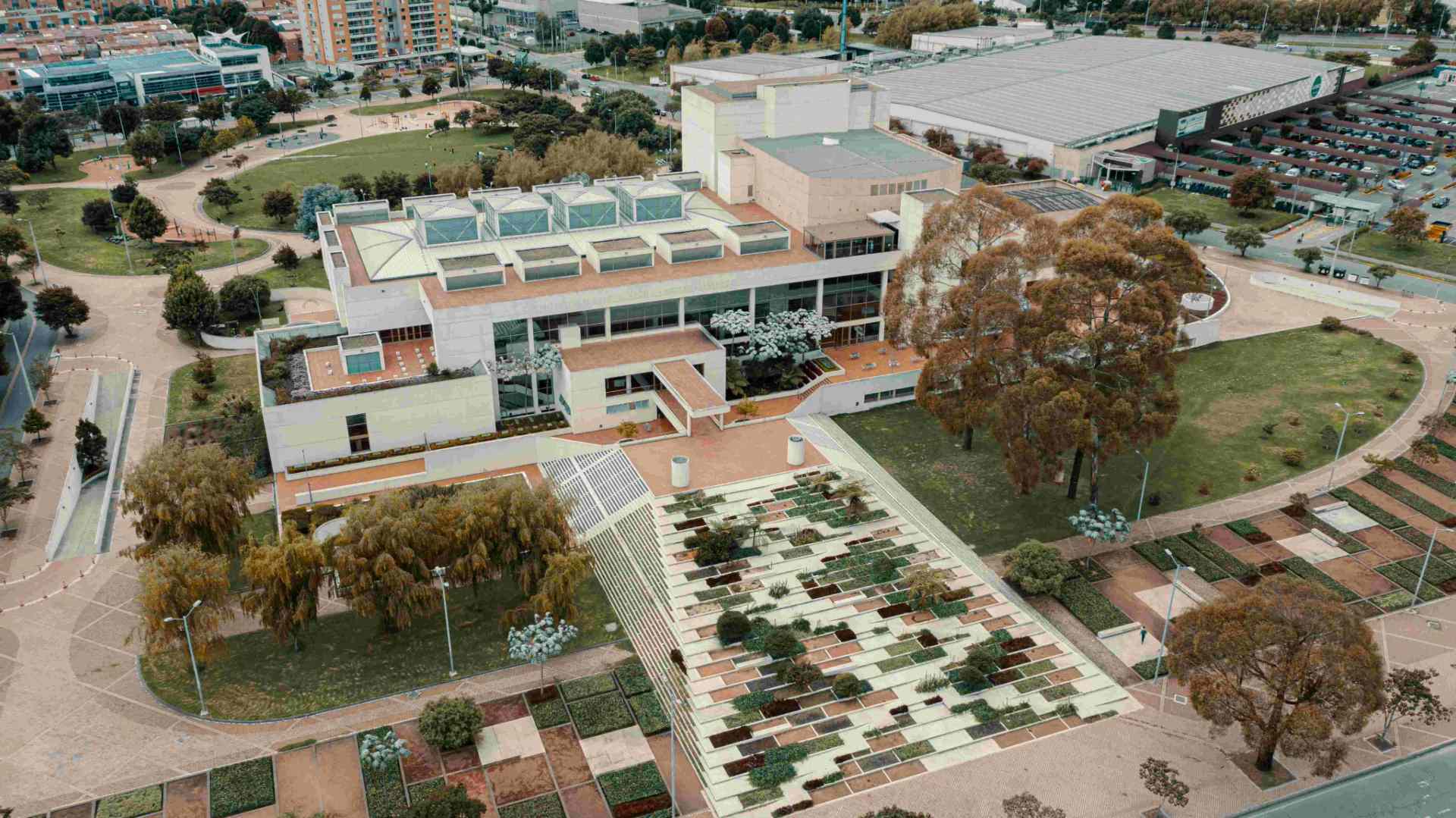
The 2010 Julio Mario Santo Domingo Library is a cultural milestone in northern Bogotá. Photo: Ricardo Baez - TDI Archive
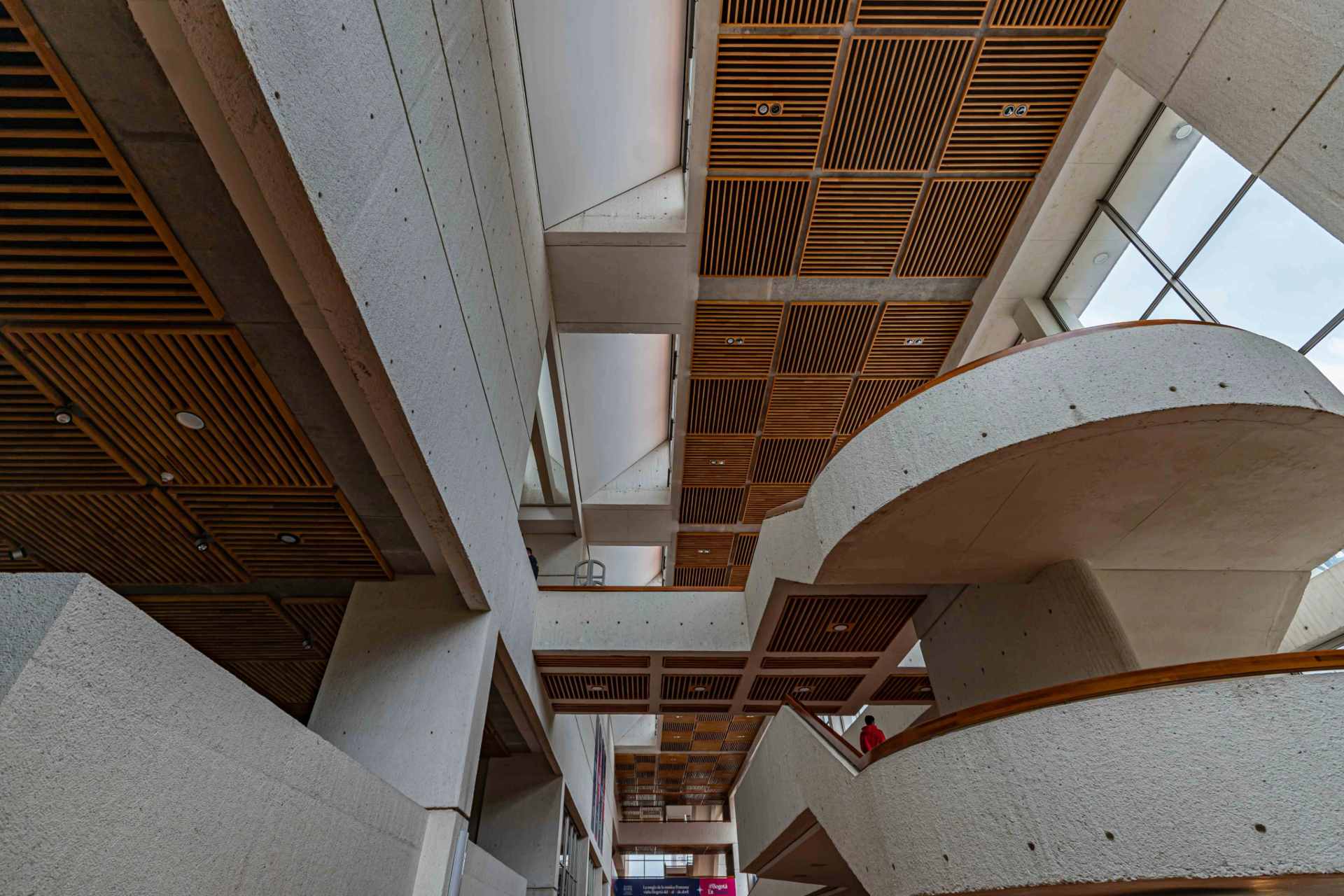
La Julio Mario Santo Domingo a work of 23,000 m ². Photo: Stefania Alvarez - TDI Archive
Take advantage of your visit to Bogotá and know this temple of knowledge. Reports: https: / / www.biblored.gov.co / libraries / libra-julio-mario
Manuel Zapata Olivella Library - Tintal
Built on the basis of an old garbage transfer plant and launched on 29 June 2001, the Manuel Zapata Olivella Public Library - also designed by the master Daniel Bermudez - pays tribute to the most important representative of Afro-Colombian literature, who was also a doctor, anthropologist and defender of the black communities.
Located in the south west of the city with coverage to the towns of Bosa, Kennedy and Fontibón, it serves about 1,400,000 users and is the result of the transformation and reuse of an old plant on a five-hectare property converted into a beautiful park on Cali City Avenue with 6th Street. The building, rescued and rebuilt with a solid concrete structure, adapted to the new use, enhancing its robust and industrial aspect.
This adaptation has allowed the community to live a close experience with space and made it an element for the enjoyment of the public through the encounter and access to culture and recreation.
While in place, you will be called to attention by the great access door that connects the first and second floor and that was a great viaduct 75 meters long that allowed the discharge of garbage to the compactors.
The imposing work shows that all the grey concrete of the original structure was preserved and the new structural and architectural elements were fused in clear concrete and then worked to highlight the aggregate limestone that reflects the light with great intensity.
The first floor, along a large corridor, is occupied by a gallery that crosses at one end in the auditorium and, on the other, in the children's room with extensions to the outside for the conduct of activities. They highlight a sequence of circular windows and perforations, which communicate to various units.
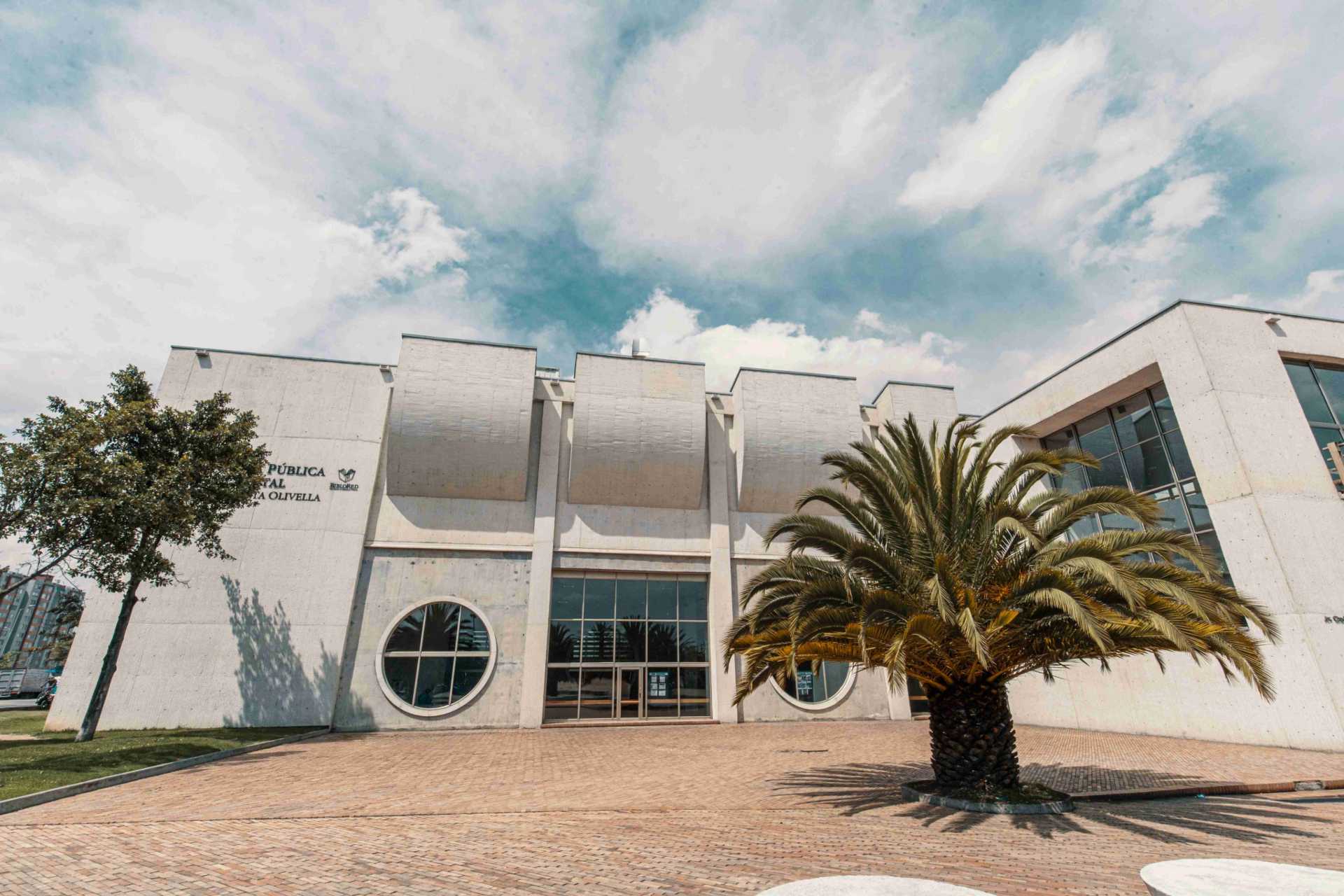
The El Tintal Library pays tribute to Manuel Zapata Olivella. Photo: Ricardo Baez - TDI Archive
The access from the first to the second floor is fantastic, you do it through a spiral staircase where the beautiful brickwork of its floor is also highlighted. and harmonious lighting thanks to artificial sources and a couple of superb windows. Of all the spaces of the Library, perhaps the most striking is the 'the Alebrije' garden: a place of social, educational and community meeting. As for its programming, which exceeds 120 events per month, it places special emphasis on the care of children, older persons and people with visual disabilities.
This academic centre covers an area built of 6,790 m ² and has a collection of almost 100,000 volumes between books, audiovisual, multimedia and serious publications, and It also has reading rooms, library, children's room, cultural center, an auditorium with capacity for 160 people, an exhibition and training room on Bogotá and the LabCo Hall: a space to create and experience around science and technology. It also has a cafeteria, bookstore and commercial premises for library-related uses.
Take advantage of your visit to Bogotá and know this temple of knowledge. Reports: https: / / biblored.gov.co / libraries / library-tintal
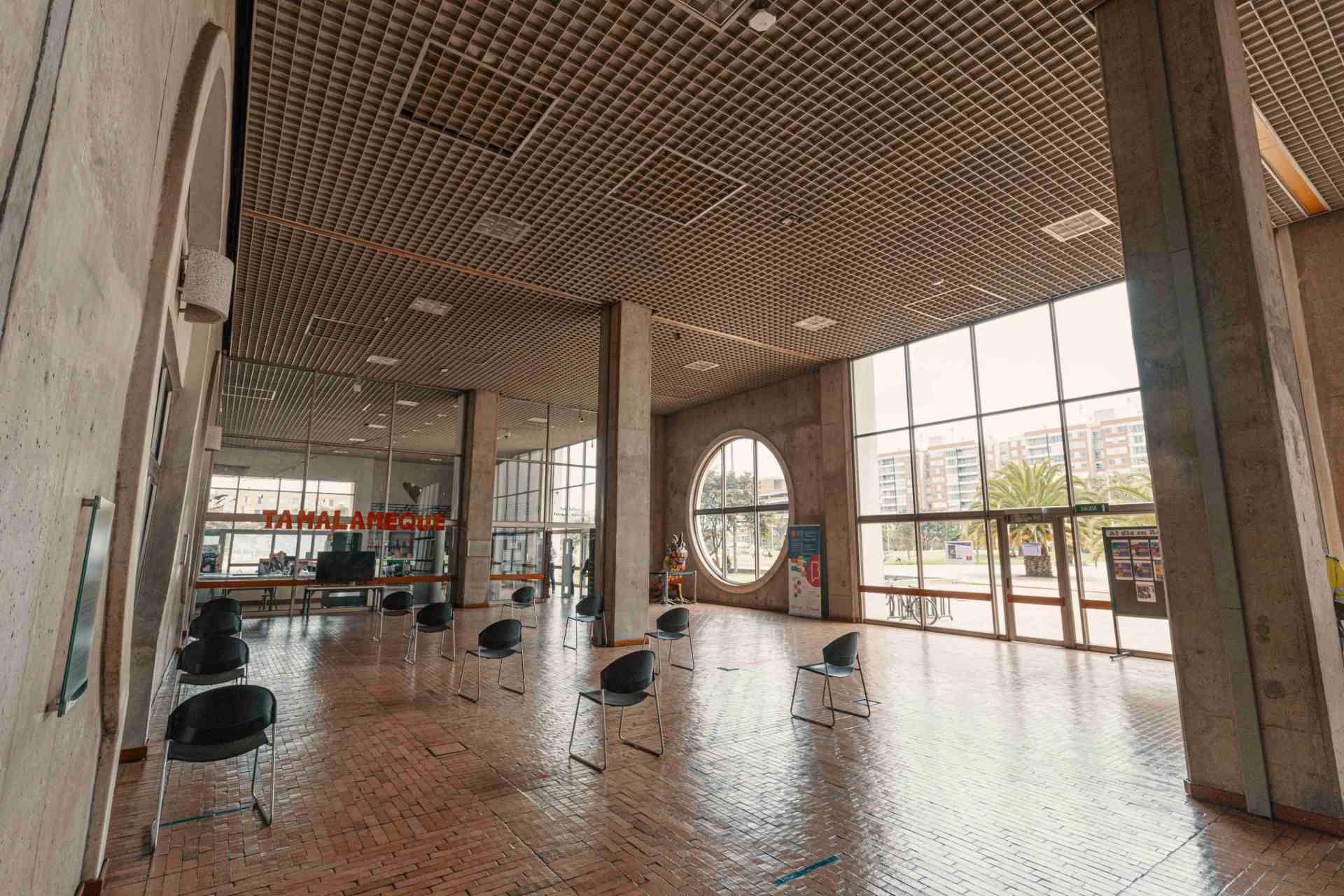
The Olivella Zapata exceeds 120 events a month. Photo: Ricardo Baez - TDI Archive