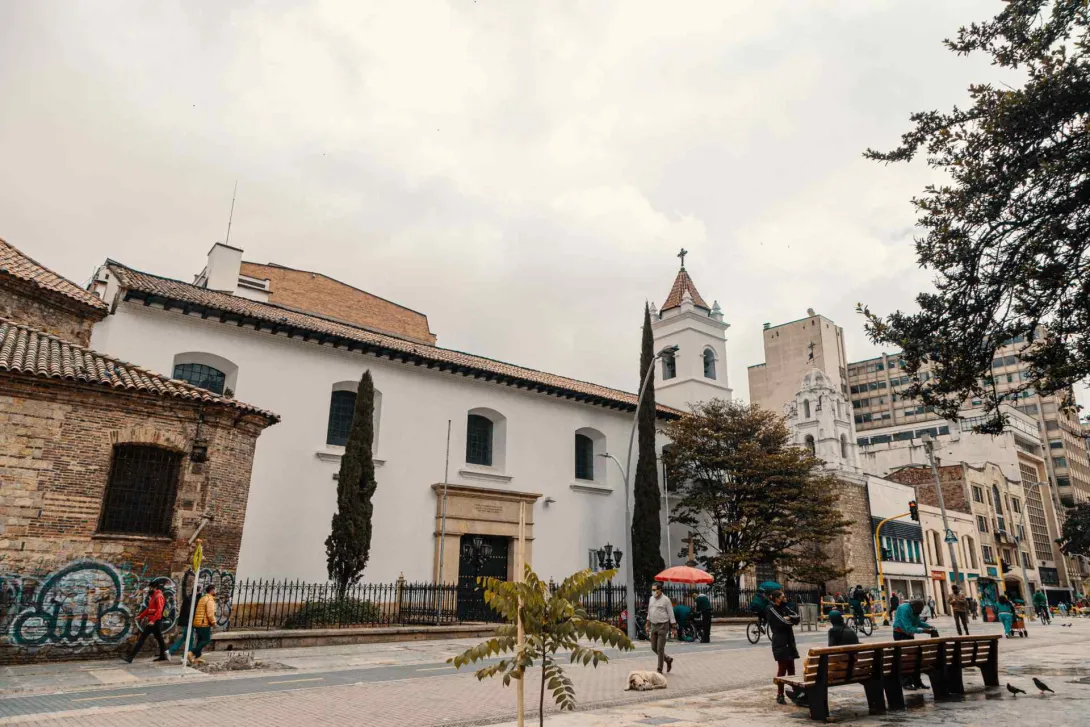
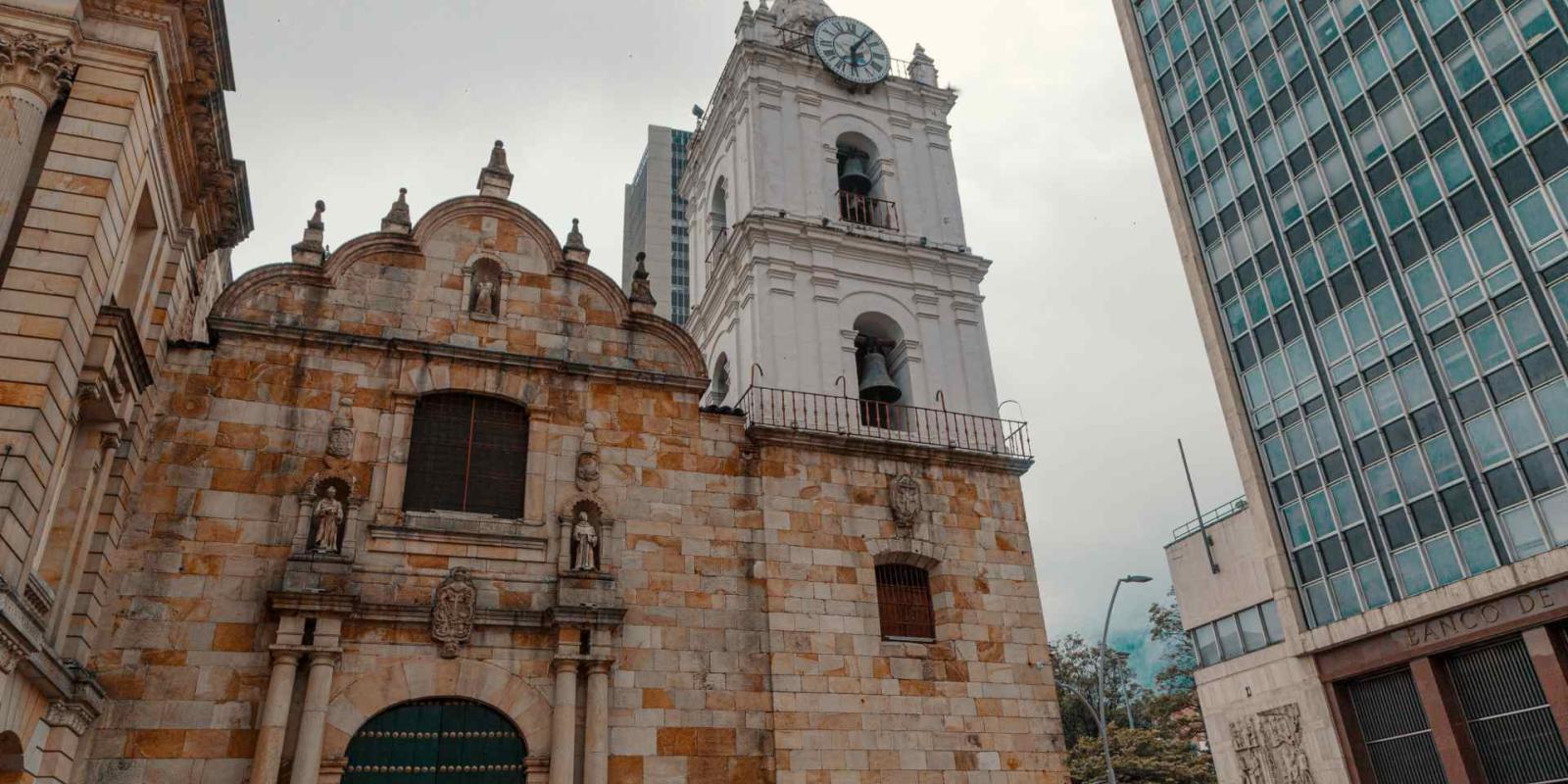

It's the oldest church in Bogotá. It all began with the arrival of the parents of the Franciscan Order to the New Kingdom of Granada in 1550. The first headquarters was located in the Seventh race, under the name of Snow ParishHe then moved to the site occupied today by the church of Saint Augustine.
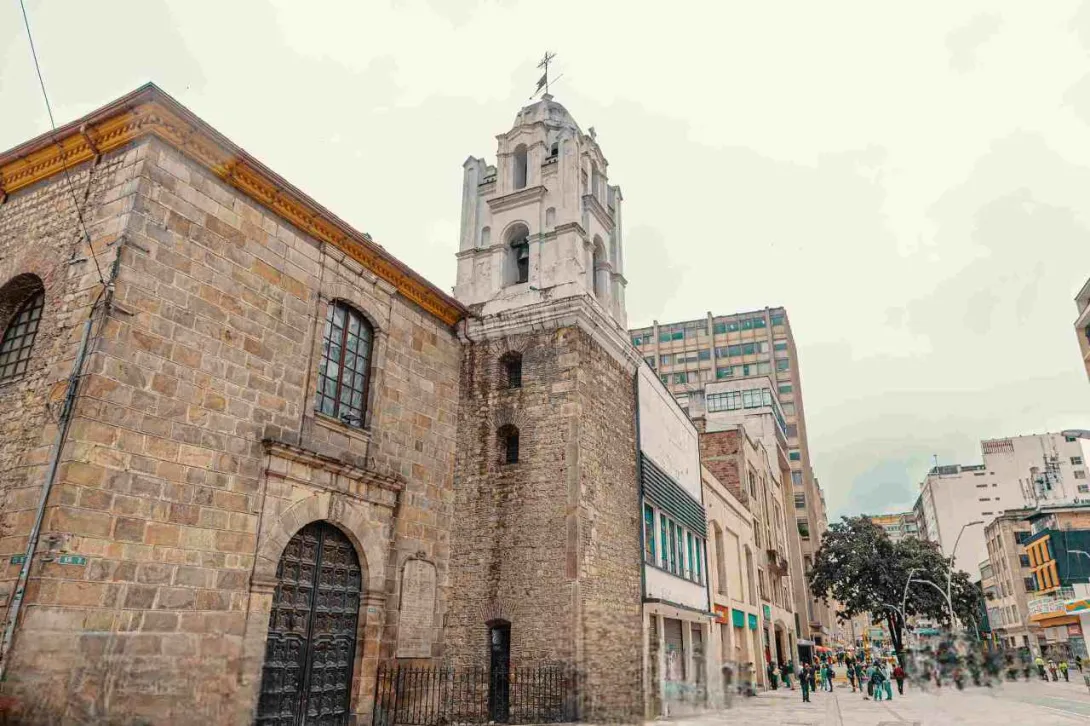
Finally, in 1557, the temple moved to its current locationto the houses donated by Archbishop Fray Juan of the Barrios. With faith and effort they were able to lift the convent that comprised two blocks. This construction was extended between 1586 and 1611; in 1623 the major altarpiece was built. Unfortunately, the earthquake of 1785 caused serious damage to the structure, and the tower had to be rebuilt. Here the Provincial Curia had its seat until 1861, when the Franciscans were expelled and the property passed to the former Tomás Cipriano de Mosquera.
It was thought to use the complex as a prison, but finally, was installed the Government of Cundinamarca. Several tremors in 1917 caused serious damage to the building and had to be demolished. The last restoration to which the church was submitted was carried out between 1988 and 1990.
At the beginning, the building had only one ship, but over time the parishioners were increasing. For this reason, chapels were added to their eastern wing. After the earthquake of 1785, the chapels were integrated into the new ship. The facade is entirely made of stone and its cover is flanked by columns of pure lines, topped by a fronton where there is a niche with the sculpture of San Francisco.
Once inside, we can appreciate the altarpiece, which was donated by Lorenzo Hernández in 1633, and the roof, where Mudejar art is represented. The arches that give rise to the altars of the sides have plateresque stems typical of the colonial period. Each of the chapels was given in concession to individuals, who gave them their present splendor. The first to be decorated was that of the Camarín de la Virgen Apopalíptica, decorated with mirrors, porcelain and cornucopies, as well as large paintings. The images of Christ, such as that of the fallen Christ, of Lugo de Albarracín, and Christ dead, of Martínez Montañez, are especially moving.