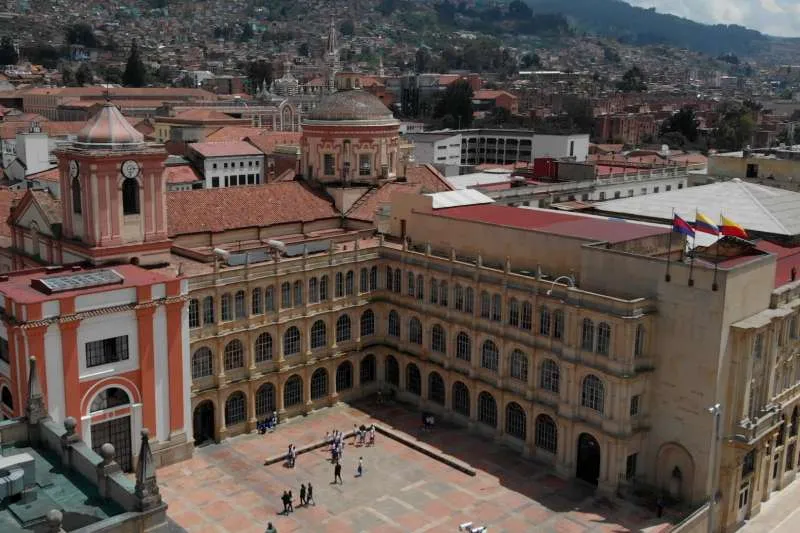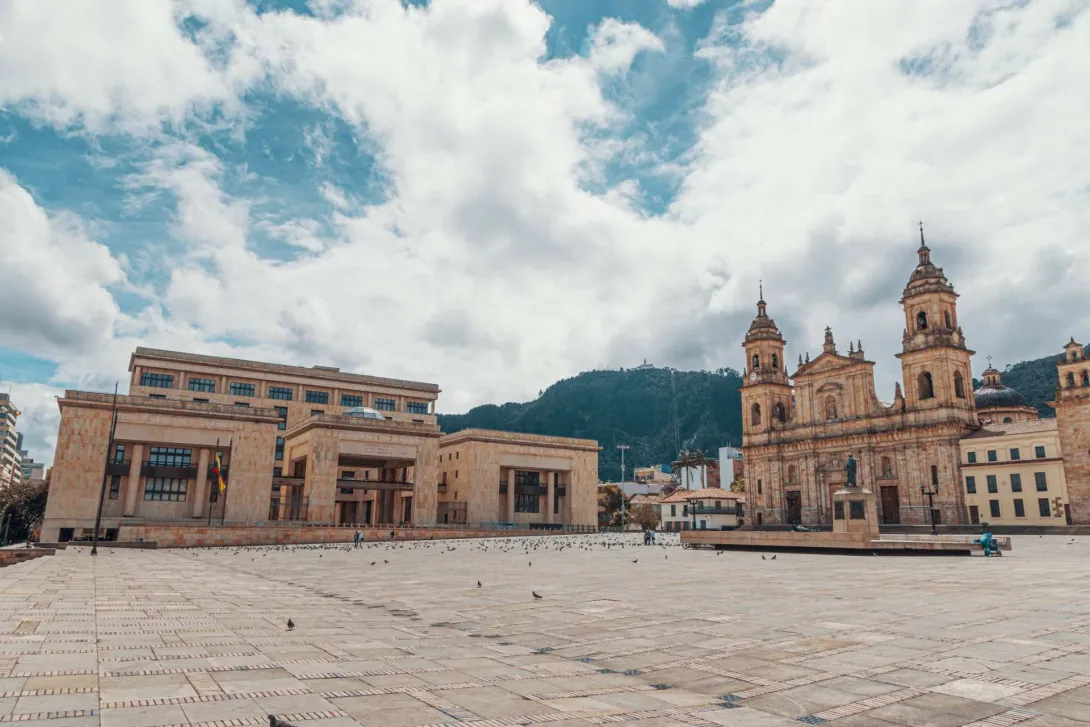
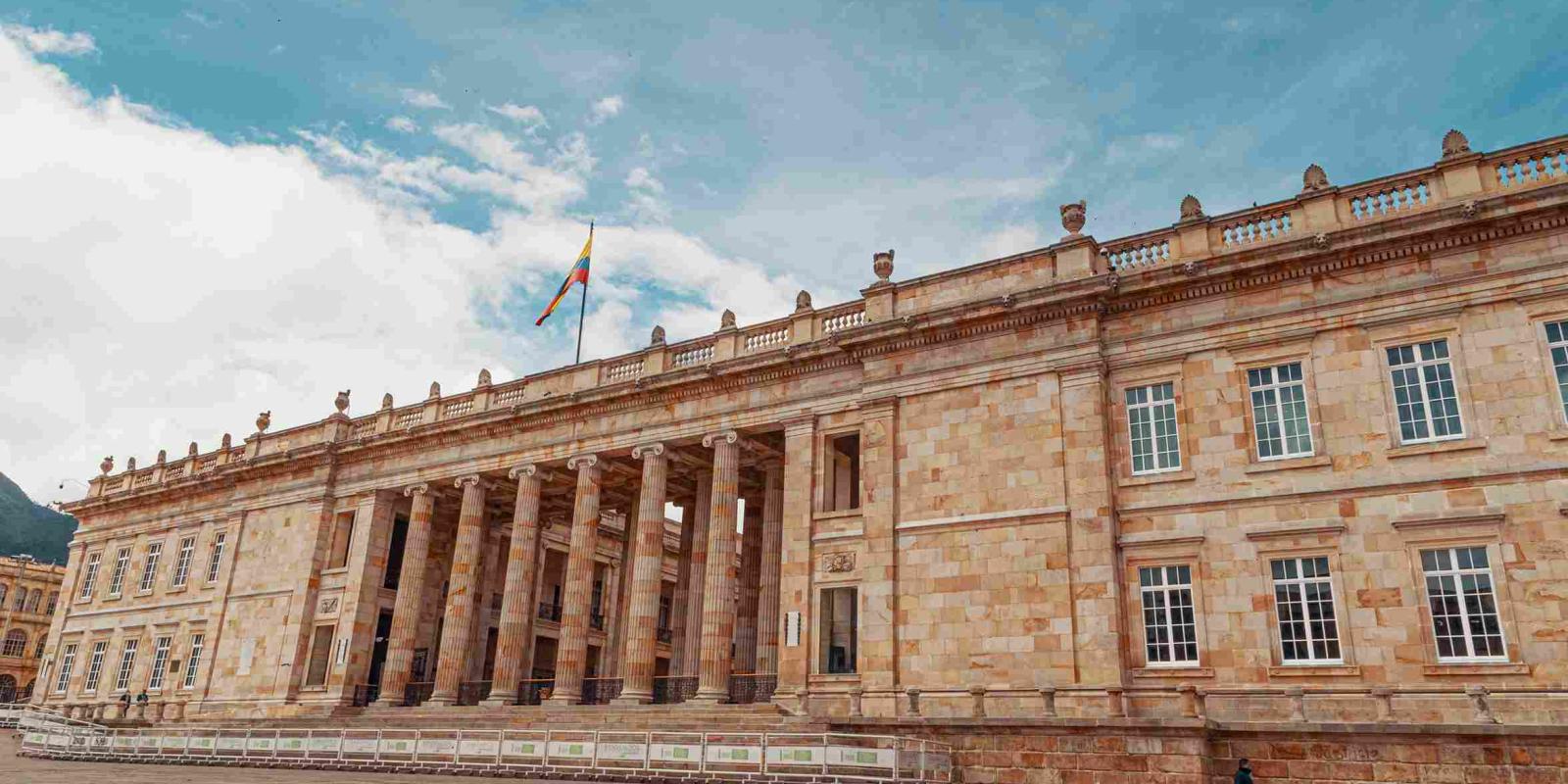
The National Capitol is a masterpiece of neoclassical architecture and symbol of the legislative power in Colombia. The building designed by the famous Danish architect Thomas Reed It had a long construction. Initiated in 1848 by order of President Tomás Cipriano of Mosquera and raised completely in stone, the work was extended during almost 80 years until 1926. The construction involved important architects of the time such as the Italian Pietro Cantini (who included some reforms in the frontis), Antonio Clatopofsky, the Togotan architect Mariano Santamaría (who designed the south side, raised the columns of the inner courtyard, the front and the porch), and the French Gastón Lelarge (who demolished the portico built by Santamaría and replaced it with the current one, designed the legislative halls and the interior dependencies and built the outer steps). The ornamentation of the construction was performed by the Swiss Luigi Ramelli.
It is said that on that date the first stone was put, as was customary, with the blessing of the Archbishop of Bogotá, Manuel José Mosquera (brother of President Tomás Cipriano) and in the presence of all the civil authorities.
The main facade of the building has two identical side bodies and one central portico-shaped, composed of a six-row column of three Ionian-style columns. declared National Monument on August 11, 1975This building is home to the Congress of the Republic, where the issues that define the country's destiny are discussed and legislated.
The National Capitol is open to the public for guided tours, where you can know the different rooms and spaces of the building, as well as learn about the history and operation of this emblematic institution.